
1. Difference Between PVC, UPVC and CPVC Solvent Cement

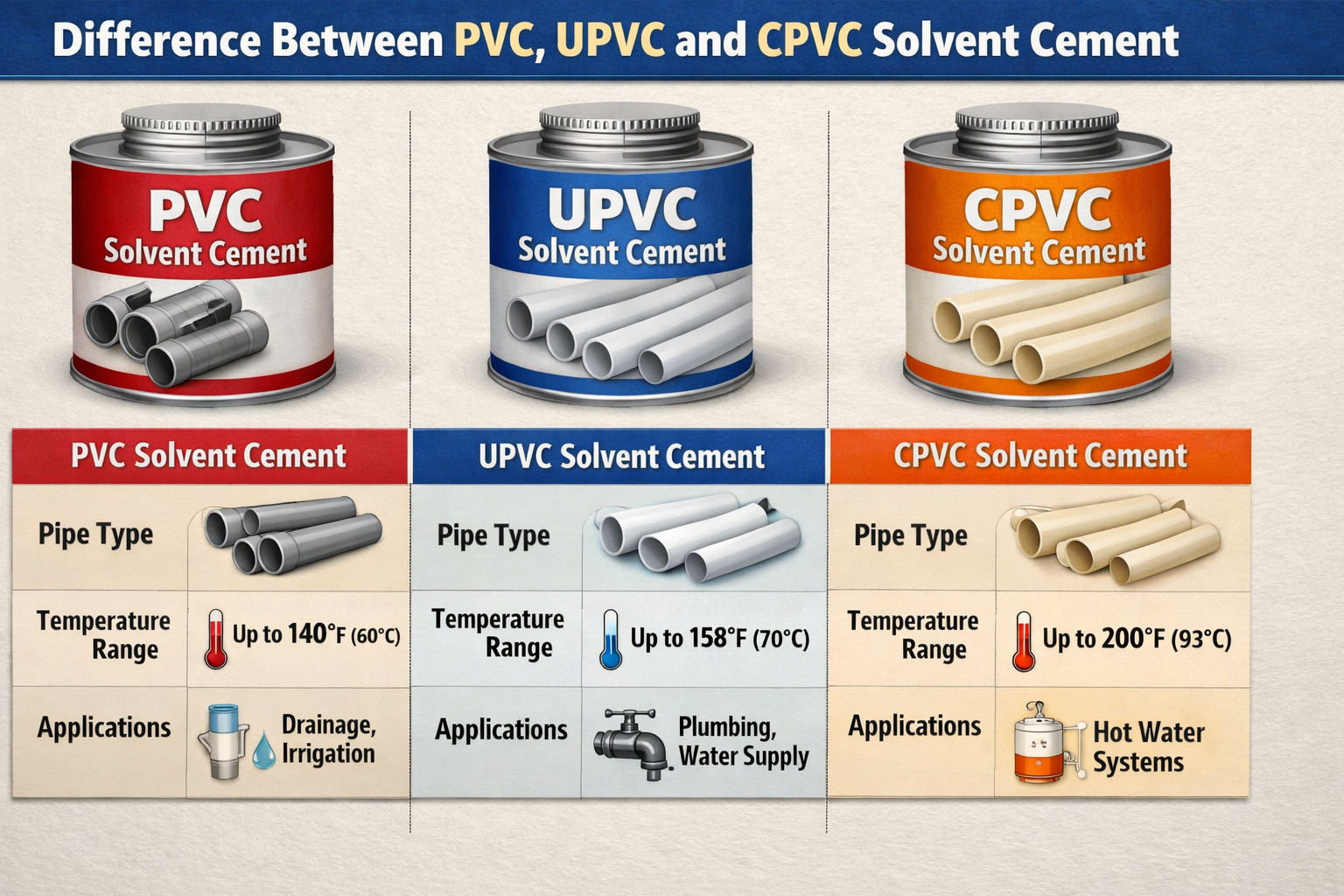
When selecting solvent cement for pipe jointing applications, it is important to understand the difference between PVC, UPVC and CPVC solvent cement. Each type is designed for a specific pipe material and application.
PVC solvent cement is mainly used for standard PVC pipes in irrigation systems, drainage lines, plumbing and industrial pipelines. It provides strong bonding and leak-proof joints.
UPVC solvent cement is specially designed for unplasticized PVC pipes. These pipes are commonly used in water supply systems, plumbing installations and agricultural piping because they offer better rigidity and durability.
CPVC solvent cement is used for chlorinated PVC pipes that are suitable for hot water applications. CPVC pipes can withstand higher temperatures, making them ideal for residential hot water lines, industrial fluid transfer and chemical applications.
Using the wrong solvent cement may reduce bond strength, cause leakage and shorten pipe life. Always match the solvent cement type with the pipe material for the best results.
Key Differences
- PVC solvent cement: Used for normal PVC pipes
- UPVC solvent cement: Used for rigid UPVC pipes
- CPVC solvent cement: Used for hot water and high-temperature pipes
- CPVC offers better heat resistance than PVC and UPVC
- UPVC is stronger and more rigid than standard PVC
Enrick Chemicals manufactures high-quality PVC, UPVC and CPVC solvent cement for plumbing, irrigation and industrial applications.